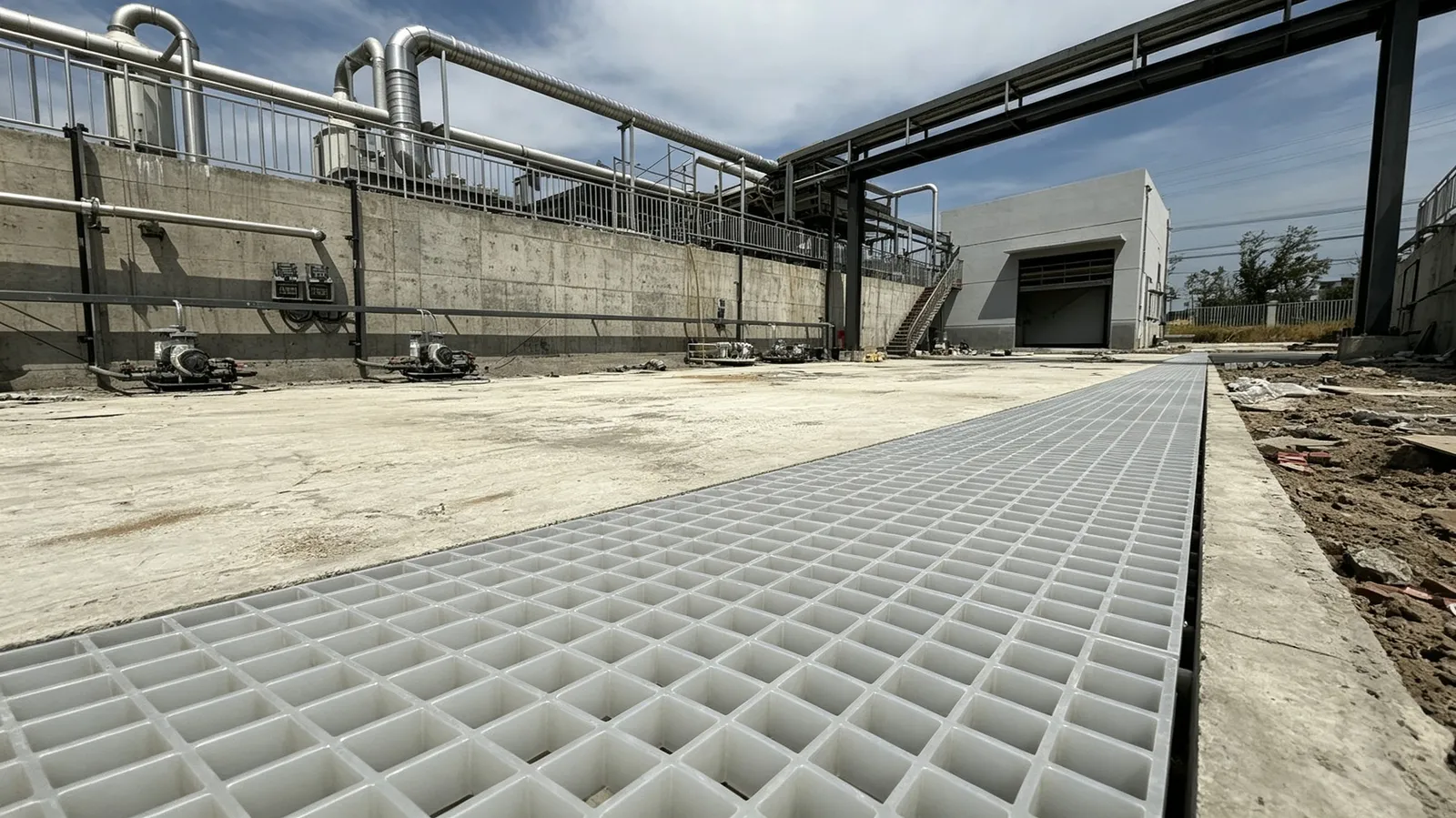
Chemical Plant Drainage Channel
- Location:
- Anhui, China
- Year:
- 2025
- Category:
- Chemical
In chemical plant engineering and maintenance, drainage channels are routinely exposed to aggressive chemicals — hydrochloric acid, sodium hydroxide, organic solvents — that destroy conventional walkway plates in months. We've spent years developing fiberglass grating walkway plates specifically for this duty.
The Limitations of Traditional Walkway Materials
Steel walkway plates corrode rapidly under acid and alkali attack, often requiring full replacement within 2–3 years. Concrete is heavy, prone to thermal-expansion cracking, and adds dead load to the structure. Both materials demand ongoing maintenance budgets that compound over the plant's service life.
The Rise of Fiberglass Grating Walkway Plates
Unmatched Corrosion Resistance
Vinyl ester and isophthalic resin systems are formulated to resist the specific chemical inventory of each plant. Independent immersion testing confirms no measurable mass loss after 30+ years of service.
Excellent Slip Resistance and Safety
Quartz-grit surface exceeds OSHA and EU anti-slip thresholds in wet, oily, and chemically-contaminated conditions. Non-conductive and non-sparking — critical properties near energized equipment.
Lightweight yet High Load-Bearing
Standard 38 mm thick panels support forklift and light-vehicle traffic. Third-party load testing available on request.
Easy Installation and Maintenance
Two workers can complete most drainage-channel runs without heavy lifting. Damaged panels are individually replaceable — no welding, no hot-work permit required.
The Positive Impact of FRP Grating Walkway Plates
Plants that have retrofitted to FRP report roughly 70% reductions in maintenance cost and significant drops in workplace slip-and-fall incidents. Drainage channels stay clear and accessible for longer intervals between cleaning cycles.
Conclusion
FRP grating walkway plates are increasingly specified for greenfield chemical plants and for retrofit of legacy steel channels. As resin systems and surface treatments mature, adoption will continue to grow.